
- March 11, 2026
- GlObeX
- 0
The Union Budget 2026–27, presented by Hon’ble Finance Minister Smt. Nirmala Sitharaman, places strong emphasis on strengthening India’s agriculture, livestock, and poultry sectors. With a clear vision of enhancing farmer income, improving productivity, and promoting rural entrepreneurship, the budget introduces several progressive initiatives that aim to modernize farming practices and develop robust value chains.
Strong Push for Agricultural Growth:
Agriculture continues to remain the backbone of the Indian economy, employing over half of the nation’s workforce. In Budget 2026, the government has reaffirmed its commitment to farmer welfare through increased investment in technology, infrastructure, and credit availability.
A major highlight is the launch of Bharat-VISTAAR, a multilingual AI-based digital platform designed to offer customized advisory services to farmers by integrating AgriStack and ICAR databases. This initiative is expected to improve farm productivity, reduce risks, and promote informed decision-making among farmers.
The budget also promotes high-value agriculture, focusing on crops such as coconut, cocoa, cashew, and nuts, along with targeted schemes for fisheries development and reservoir modernization, which will enhance irrigation and fish farming capacity.
Major Boost to Animal Husbandry and Poultry Sector:
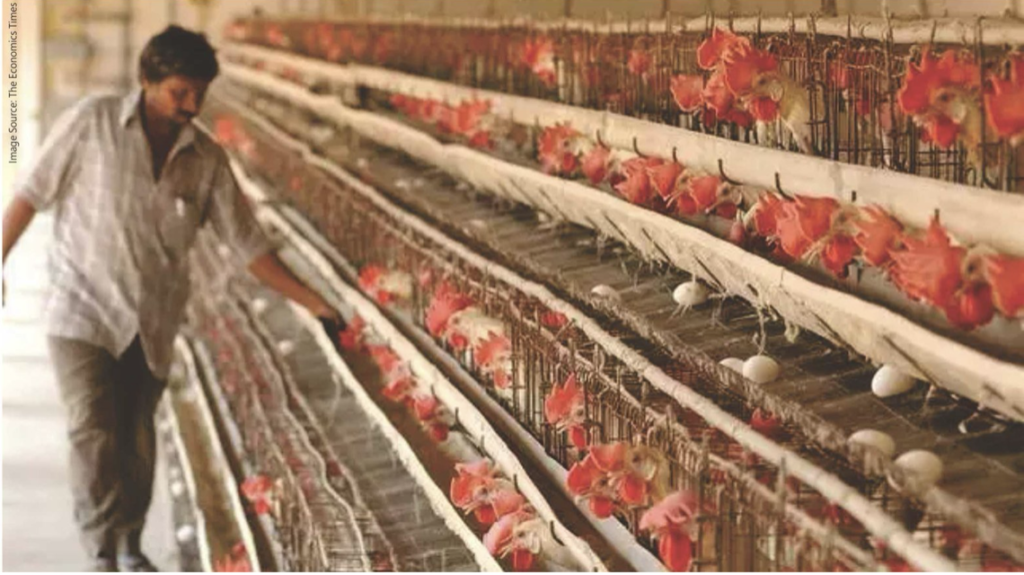
The poultry and livestock sectors have received a significant boost, with over 26% increase in allocation for animal husbandry. This reflects the government’s recognition of livestock farming as a key driver of rural income and nutrition security.
Key announcements benefiting poultry include:
- Credit-linked subsidy schemes to encourage entrepreneurship in poultry, dairy, and livestock enterprises.
- Modernization of poultry infrastructure, including breeding centers, feed systems, animal health services, and cold-chain logistics.
- Development of integrated poultry value chains, supporting processing, marketing, and export competitiveness.
- Expansion of veterinary services with 20,000 additional professionals, improving disease management and biosecurity.
- These steps aim to shift poultry farming from subsistence-level operations to organized, commercial, and export-oriented enterprises.
Entrepreneurship and Rural Employment Generation:
The introduction of entrepreneurship-focused subsidies is expected to attract private investment, create rural jobs, and strengthen Farmer Producer Organizations (FPOs). By supporting small and medium poultry enterprises, the government aims to generate sustainable livelihoods while enhancing protein availability through eggs and poultry meat.
Additionally, incentives for cooperatives supplying cattle feed and tax exemptions for bio-gas and Bio-CNG projects will help reduce operational costs and promote sustainable waste management in poultry and dairy farms .
Focus on Sustainability and Technology
The 2026 budget emphasizes sustainable agriculture through digital transformation, AI-driven advisories, scientific farming practices, and eco-friendly energy solutions. Integration of technology is expected to minimize losses, optimize feed efficiency, improve disease control, and enhance overall farm profitability.
Conclusion
The Union Budget 2026 presents a forward-looking and farmer-centric framework for agriculture and poultry development. By combining technology, infrastructure investment, entrepreneurship support, and sustainability initiatives, the budget lays a strong foundation for boosting rural income, enhancing food security, and making India a global leader in poultry and livestock production.
Overall, Budget 2026 marks a significant step towards modernizing Indian agriculture and transforming the poultry sector into a high-growth, employment-generating industry.