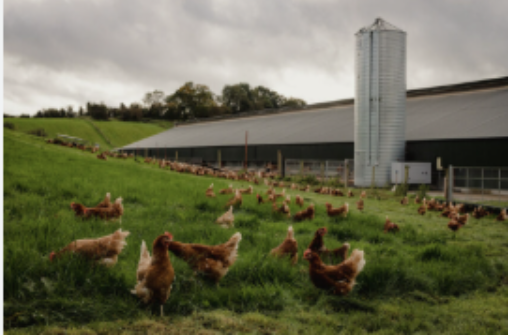
A wholesale shift to free-range and organic egg production could raise greenhouse gas emissions by 60% and almost double land use, even as it improves hen welfare, according to research from the University of Oxford’s Smith School of Enterprise and the Environment.
The study, published in Royal Society Open Science, compared several production scenarios for the UK egg industry — including shifts to barn, free-range and organic systems — while keeping total egg output constant. It found that cage-free systems may require larger hen populations and increase environmental pressures, and that transitioning away from caged systems without also improving mortality rates and feed efficiency is likely to worsen environmental impacts.
“Our research highlights the importance of considering animal welfare, environmental impact and food production together when shaping the future of egg farming,” said Harriet Bartlett, senior research associate in sustainable food solutions at Oxford. “Being aware of these tricky trade-offs will help us make better decisions for the environment and animal welfare in the future.”
The study also found a significant rise in mortality for 100% free-range and organic systems. The authors acknowledged that the underlying data, collected between 2009 and 2010, does not capture more recent developments in laying-hen production, describing this as an important limitation, but said it remains the most comprehensive dataset available for UK laying-hen systems.
Bartlett said the findings were not an argument for returning to caged systems, but called for a broader view of the trade-offs involved in transitioning egg production.